Pages

Showing posts with label adopt. Show all posts

Tuesday, July 15, 2014

Music Therapy for Animals

Part of my morning routine includes turning on the radio for my cats.  They really like to listen to NPR when I am out of the apartment. More on that later.

My Bachelors and Masters degrees are actually in Music Performance, so these stories are a great mix of two of my great loves, animals and music. I know how music heals the soul, and it does so with animals too.

A lot of the articles I've read about 'Music Therapy for Animals' drone on and on about the science and psychology behind music therapy. I don't really care that much about that. Does it work or not?

The proof is in the pudding. I want to share my personal experiences and success stories with you:


Success Story 1: Stewie the Hamster


About 11 years ago, I got Stewie the Hamster. When I went into Petco that day I no intention of leaving with a furry friend, but the clerk told me he'd been there for a long time.  He was gorgeous and crazy cute, but the devil in hamster form...he had never been socialized and was a biter. No parent or hamster-loving kid was going to take him like that, but I was confident I was the one to turn him around, so of course he came home with me.

I can't find any old photos of Stewie but he looked like this little guy.  He was crazy cute, but so mean!

He bit me really good a couple of times while I was trying different things to socialize him.  Hamster bites are like two razors coming into your skin. After a couple of days of trying to handle him, I was frustrated but still wasn't going to give up. Everything I was reading just said to just get your hamster used to being handled, but he'd bite every time!  I finally came to the conclusion that handling him repeatedly just wasn't going to work, not right away anyway.

So one day I had the idea to turn on the radio before I left for work. A light rock station with some chatter mixed in, on low volume. 

I came home 9 hours later and instead of him buried in the corner like he usually was, he was standing toward the front of his cage looking at me.   I carefully put my hand in and he let me pat his head with my finger - no blood involved! I didn't want to push it so I just opened the cage enough to see if he wanted to crawl into his exercise ball and he did (without my hands). He always loved the ball, but not hands.

The next day I did the same thing again and he was even better! I could actually hold him, incident free! I couldn't believe the complete 180 he made in his personality. I told everyone about my miraculous hamster experience, I couldn't believe it!

From that day until the minute he died, Stewie was the most cuddly and loving hamster I've ever had. He loved to be held, was gentle, adored his ball, and always wanted to be out with me exploring. He never bit anyone ever again and was very happy.  He was a wonderful little buddy.


Success Story 2: Maya the Cat


Maya is not my cat, but my parents'. Our family cat of 15 years had died the year before, and my parents' house was feeling very barren without any furry family members. So when a friend's barn cat had kittens, and once they were fully weaned I sprung at the opportunity.  Maya was the only one who didn't immediately run away, so she came home with me. She was a very sweet cat, beautiful dilute calico, who for a few years was the only cat in the house.

We didn't know much about cat behavior at the time, and Maya seemed normal and content, so when a second (and shortly thereafter, a third) cat came to be a part of the household, we didn't understand why Maya became a recluse to the basement. The new cats were a few years younger than her, and we quickly learned that they would sometimes bully her with their rough play, so she'd retreat to her safe hiding places in the basement. 

Maya prefers string and mousies to roughhousing.

She gradually reverted into a very insecure cat. Each time I'd visit instead of being head butted with purrs, she would hide, and if I tried to pet her she might even hiss and spit at me. It was sad, and my parents didn't know what to do.

So, remembering my success with Stewie a few years earlier, I suggested the music therapy.  We set up a radio in the middle of the basement and put on the classical music station.

Maya's transformation wasn't as immediate or as revolutionary as Stewie's was, but it absolutely did help. She started spending a lot more time upstairs. She stood her ground more against the other two cats. They don't fight, she's just made it clear she wasn't going to run away from them. She stopped acting like the victim, stopped acting like "prey" (as Jackson Galaxy puts it) and they stopped treating her that way!  She was getting her self-esteem back.

Evidence of her progress!
Here is Maya (right) begrudgingly sharing a chair with one of the ruffians, Rocco (left).
I love her expression here, it's like "Ugh...it's you."

Now she purrs more and hides less. She is still passive to the other two ruffians (as I call them), but those two largely leave her alone now and just tumble around with each other. She wants nothing to do with that play-wrestling, and much prefers chasing a catnip mousie down the hall.

She still has the radio playing classical music 24/7 downstairs. There are quiet places she can get away from it if she so chooses, but the places she likes to sit to look out the window or watch everyone else is within earshot of the music.


Success Story 3: Oliver the Cat

Now back to my choice of NPR for my three cats.  My two females, Pretzel and Meatball, absolutely love strangers and welcome visitors with head butts and cuddles (whether the visitors want them or not!). 

Oliver on the other hand, would always hide for as long as he could. If he did get the gumption to come out from under the bed, he'd plaster himself to my side, every muscle as tense as can be. He would never hiss or anything, but I didn't like seeing him so insecure in his own home. 

He's generally a relaxed and happy cat, but not when he hears strange voices in the apartment. Plus he's all black so I think he knows he's invisible under the bed!

Sweet boy loves the piggies. And boxes.

So I'm sure you can guess what I did...a couple of months ago I set up a radio in the kitchen (the middle of the apartment) and chose NPR for the nice variety of low voices calmly prattling the news mixed with all types of music. Voices seem to be his sensitivity, so I wanted to make sure he heard strange people talking on a regular basis.

The proof is in the pudding: a couple of weeks ago, after we've been doing the NPR experiment for a little while my dad came to visit for the weekend. Oliver did not hide...not for even a minute!  He trotted right out, jumped up on the couch next to him and waited for pets, just like he does with me when I come home. 

I was so proud of him and happy that the music / radio therapy had worked yet again! He was completely relaxed and content hanging out with us. He'd never done that before with visitors.

The next weekend my mom visited, and he did the same thing. He even gave her head-butts, purrs, and licks. No hiding.  I think his days of being insecure and skittish around strangers might be over for good!

We're going to continue the NPR therapy in our apartment forever, as I don't want any relapse. It works, and we're sticking to it.

As you can see, this has really worked wonderfully for me and my pets.  If any of my stories sound like something you are struggling with for any of your pets or animals in your life, I suggest trying radio / music therapy!**


**Disclaimer: I am not a vet, I only speak from my personal experiences with my healthy animals. There can be a lot of reasons why an animal might behave strangely, and only a vet can tell you if there are any physical reasons for why your pet might be acting in a certain way.

*~*~*~*~*~*

Read More about Music Therapy for Animals:


Music Therapy Helps Soothe Humans and Animals Alike

Harpist Soothes Cats at a Troubled Minnesota Shelter

Music Therapy for Cats

Music Therapy for Dogs

*~*~*~*~*~*

Even cows love music!

Wednesday, July 9, 2014

Bottle-Feeding & Care of Orphaned Kittens: Part 2 - Feeding & Weaning

Last night I attended a class by the Mayor's Alliance for NYC Animals called Bottle-Feeding & Care of Orphaned Kittens. It was hosted at the ASPCA's lovely midtown offices. I learned so much in those 2 hours, this will require a couple posts to cover the topics. Click here to read my previous post on Kitten Supplies.  

This topic: Feeding and Weaning!

The first step after finding a young kitten is to determine its age.  Kittens develop at their own speed based on environmental and genetic factors. These photos and descriptions should help you determine how old your kitten is:

First Week

When kittens are born they are blind and deaf. They cannot urinate or defecate on their own (until 4 weeks). The umbilical cord may still be attached (up to 4 days).  A one week old a kitten's eyes are still closed, ears are folded over. It cannot walk. It sleeps 90% of the time, nurses 10% of the time.


Feeding 1-2 Weeks:
  • 1 part KMR Formula + 2 parts Pedialyte (or water).
  • If kitten gets diarrhea increase the Pedialyte. If diarrhea persists more than 2 days, contact the vet!
  • Kittens can be fed every 4 hrs but schedules vary. Keep them on a steady schedule.
  • Burp and stimulate after every feeding. Sometimes they'll eat more after that.
  • Always test warmed formula on your wrist before feeding!

Second Week

Kittens gradually become more aware of their surroundings and interact with each other. Their eyes will open around 10 days. By the end of the second week their sense of smell is developing, they will hiss at unfamiliar scents, and interact with each other. Their ears will uncurl during this time, and they will begin to crawl and knead.


Feeding 2-3 Weeks:
  • 1 part KMR + 1 part Pedialyte (or water)
  • Same as above but kittens may go longer between feedings.
  • Note: Kittens will be much more active at this stage and climb out of everything. Their claws cannot retract.  Make sure your box has a cover, or better yet use a carrier.

Third Week

By now you can clearly determine if kittens are boys or girls. The teeth start coming in, and their walking becomes more confident.  They are just beginning to play and develop fine motor skills, and their eyesight improves.  By the end of the third week formula can be supplemented with solid food.

All kittens have blue eyes for at least the first few weeks.

Feeding 3-4 Weeks:
  • Time to start weaning and litter training!
  • Continue bottle feeding, but supplement with baby food - chicken or turkey baby food mixed with formula can be spoon fed to kittens 2 or 3 times a day. Baby spoons are great for this.
  • Place kitten in litter after each feeding and move their paws to demonstrate digging. Soon they will use the box on their own.
  • Kitten's stool will start to get more solid after a few days of baby food. Continue to stimulate if kitten does not use the litter.
  • Tip: Once a kitten starts chewing a bottle rather than suckling, it's time to give up the bottle.

Fourth and Fifth Weeks

By now most kittens will eat and use the litter on their own, although you should still place them in the litter box after each feeding. They will play with their littermates, explore, learn to dig, and can roll over and get back up.


Feeding 4-5 Weeks:
  • Some kittens may still want the bottle, but most will be eating and using the litter on their own.
  • This is a good time to start regular pate cat/kitten food.
  • If you have more than one kitten a Frisbee is great for feeding since it is low, easy for them to access, won't spill, and keeps most of the food off the floor. They will crawl through it though!

Important Tips

  • NEVER feed a kitten that is too cold. Temperature should be 98-101 degrees. Warm a cold kitten immediately using a heating pad wrapped in a blanket, or wrap and hold against your chest.
  • Never feed a kitten cow's milk.
  • Never feed a kitten on its back, like you would a human baby. Kitten should be upright or on its stomach and leaning forward. 
  • If you pull the bottle away a tiny bit, this may encourage suckling.
  • Resist the urge to overfeed at one sitting to avoid diarrhea.
  • Any lack of eagerness to suckle and failure to gain weight require IMMEDIATE veterinary attention!
  • Track your kitten's weight: a 4 week old kitten should weigh around 1 pound. A 12 week kitten should weigh around 3 pounds.


In the NYC area and want to attend the next Bottle Feeding workshop? 

Click here to sign up! (next one is on 10/7/14): http://bit.ly/BFK1410


*~*~*~*~*~*

Sergeant Frank Praytor looks after a 2 week old kitten (named "Miss Hap") during the height of the Korean War in 1952.

Bottle-Feeding & Care of Orphaned Kittens: Part 1 - Supplies!

Kitten Season is in full swing. It starts in spring, peaks through late spring and summer, and ends in the fall.  Shelters around the world are currently inundated with kitten orphans, many of whom are younger than 3 weeks old, also known as "Bottle Babies".

Last night I attended a class by the Mayor's Alliance for NYC Animals called Bottle-Feeding & Care of Orphaned Kittens. It was hosted at the ASPCA's lovely midtown offices. I learned so much in those 2 hours, this will require a couple posts to cover the topics.

This topic: Kitten Supplies!

Click here to read my post on Kitten Feeding and Weaning.


A woman named Iris taught the class. She is a very knowledgeable volunteer and longtime cat/kitten foster at Animal Care & Control of NYC.  She said she elected to volunteer there 8 years ago, because she knew they needed the most help. (Click here to learn more about volunteering at the AC&C).

She told us that the AC&C used to get 40,000+ animals through their doors each year. Now thanks to TNR (Trap-Neuter-Return) efforts in the city, particularly by the NYC Feral Cat Initiative (NYCFCI) of the Mayor’s Alliance for NYC’s Animals, that number is down to a little over 30,000 per year. Still an incredibly high number, but at least it's better than it was.

Iris set up this display of everything you might need if and when you ever find or foster a baby kitten.

The brown thing in the lower left corner is a wool sock stuffed with uncooked rice, and tied shut.  You heat the rice-sock in the microwave for 1-2 mins, and it becomes a great homemade heating pad! Kittens snuggle it.

The items in the display (starting in the upper left side):
  • Scale - the most important thing is that your kitten gains weight EVERY day. You can find cheap small kitchen scales such as this one, at places like Target.
  • Pedialyte - mix Pedialyte with the formula mix for kittens. Also good if you have a sick cat of any age, especially with diarrhea.
  • KMR Kitten Formula - available at pet stores. Mix with Pedialyte, put into bottle, and warm.
  • Dawn soap - blue Dawn eliminates fleas in kittens. Do not put any chemicals on babies! Can bathe kittens, but don't douse the head. Iris also says a ring of Dawn around the neck and tail area helps.
  • Funnel - for transferring mixed formula into the baby bottle.
  • Wet Ones wipes - can help wiping down the kitten and small messes.
  • White Faux wool blanket - do NOT use this! Some sites and videos suggest using these, but kittens can suffocate because they can't turn their heads among the large chunks of fluff.
  • Yellow blanket - an example of a good blanket to use for kittens. Since kittens can't retract their claws even towels aren't the best option, they get caught up in the little loops of fabric.
  • Hand Sanitizer - this is for your hands, especially if you have sick kittens you have to be very clean.
  • Canned cat food - mix canned (pate) food with formula for weaning, spoon feed if necessary.
  • Pee pads - for the kitten's enclosure.
  • Baby spoon - helpful with weaning kittens, spoon feed a mixture of wet pate cat food and formula.
  • Baby bottles - Iris likes these, they come with extra nipples. Available at pet stores.
  • Yellow Duckie - for the kittens to cuddle up to.
  • Frisbee - good for feeding weaned kittens wet food. Nice and low, can't spill it, can feed multiple at a time.
  • Mederma - good for cat scratches (for your skin, not them).
  • Thermometer - Kitten's temperature should be between 98 - 101 F.
  • Small Whisk - good for mixing formula.
  • Baby nail clippers - for clipping little claws. Good practice to get them used to nail trims early!
  • Small syringes, eye droppers - can be used for feeding or giving medicine.
  • (Human) Baby Food - chicken or turkey flavors are also good for weaning kittens. Also good for an older cat that isn't feeling well or isn't eating.  Make sure there's no vegetables or anything else in there. Plain chicken or turkey only.
  • Rice Sock - I described this above in the caption. Really handy!
  • Measuring cup - for measuring formula.

Here are a few of the tips, tricks, and facts I jotted down in my notebook:

  • Chicken and turkey flavored baby food for weaning or sick adults. I never would have thought of that before.
  • Pedialyte for sick cats and kittens. Another handy item that's easy to get!
  • 101 degrees is the usual temperature for a kitten. Any cooler and they probably need to be warmed up (rice sock to the rescue) and any warmer they are running a temperature.
  • Mederma is great for cat scratches. 
  • Mineral Oil is great for treating ear mites.
  • Blue Dawn Soap is great for treating fleas in kittens.
  • At 3 Weeks the weaning begins. A kitten should be introduced to a Formula + Baby food (chicken or turkey) + Pedialyte mixture, spoon fed (or your finger) to start the weaning process.
  • At 4 Weeks the litter box process begins.  Non-scoopable clay litter is what kittens need.
  • You can supplement a pregnant or nursing cat's diet with KMR and Pedialyte.
  • Keep cats (outdoor, feral, cord chewers) cool in the summer without using electricity by freezing gallon jugs of water and leaving out for them.

Missed this one? They are offering many more workshops of all types, especially TNR and Kittens in the coming months. Check out the list and RSVP here!


In the NYC area and want to attend the next Bottle Feeding workshop? 

Sign up here (next one is on 10/7/14): http://bit.ly/BFK1410


*~*~*~*~*~*
Read More Here:


*~*~*~*~*~*


Tuesday, July 8, 2014

Controversy of Captivity : Behavior Problems

When we think of animals in captivity the first thought is usually animals in zoos. However, there are many more types of abusive captivity out there in which animals are currently living:  puppy mills, aquariums, marine mammal parks, pet stores, factory farming, gestation crates, circuses, and the list goes on.

Animals that live in human care are in captivity.  Dogs were domesticated as early as 15,000 BC, but throughout history not only pets and livestock were kept in human care, but also wild animals in menageries and zoos.

The menagerie at Versailles, constructed by Louis XIV in the 1660's.

Most modern zoos make great efforts to create a habitat as close to the animals' natural environment as possible. However due to the nature of traveling circuses, factory farming, and puppy mills, animals in those situations are trapped in tiny enclosures and abusive environments. Those enterprises use animals for profit, so to maximize profit, they minimize expenses (at the animal's suffering).

Occasionally these captive animals, particularly those non-domestic wild animals, develop repetitive and purposeless behaviors called stereotypical behaviors or zoochosis. These behaviors include pacing, self-mutilation, over-grooming, swaying, head bobbing, and bar biting, to name a few.

If you have been to a zoo, pet store, or circus, then I guarantee some of these will look familiar to you:

Pacing

This is very common, I'd be very surprised if you haven't seen this before.  This usually causes well worn paths in the ground, and is often seen with big cats and wolves in captivity.

There can be a few reasons why an animal might pace, some theories include pre-feeding anticipation, checking on or marking territory, or an old habit ingrained from a previous small zoo enclosure.  However, as in the example in the video below, the enclosures are very small, with no behavioral enrichment opportunities (more on behavioral enrichment further down):


Bar biting

Includes licking, biting, chewing the walls or bars. Often seen in giraffes and primates.


Swaying, Rocking, Head Bobbing

Standing in one place and repetitively swaying back and forth. Seen in many different animals, particularly bears and elephants.


See more Stereotypical Behavior patterns here.

How to combat stereotypical behavior? Behavioral Enrichment!

So, now that we know what to look for, what is the best treatment?  The answer is Behavioral Enrichment.  I give the Sea Lion narration for feedings and enrichment sessions at the Central Park Zoo, and the way we explain Behavioral Enrichment is as follows:

"If you've ever played fetch with a dog or given a cat a scratching post, that is all behavioral enrichment. It encourages animals to do behaviors that are good for both their physical and mental well-being. Behavioral enrichment gives animals at the zoo something active to do and something intellectual to focus on."

Excellent buffalo enrichment for the lions at the Cheyenne Mountain Zoo.
The buffalo was built so keepers can attach meat, rawhide, and play sounds from it, to further enhance the lions' enrichment experience.

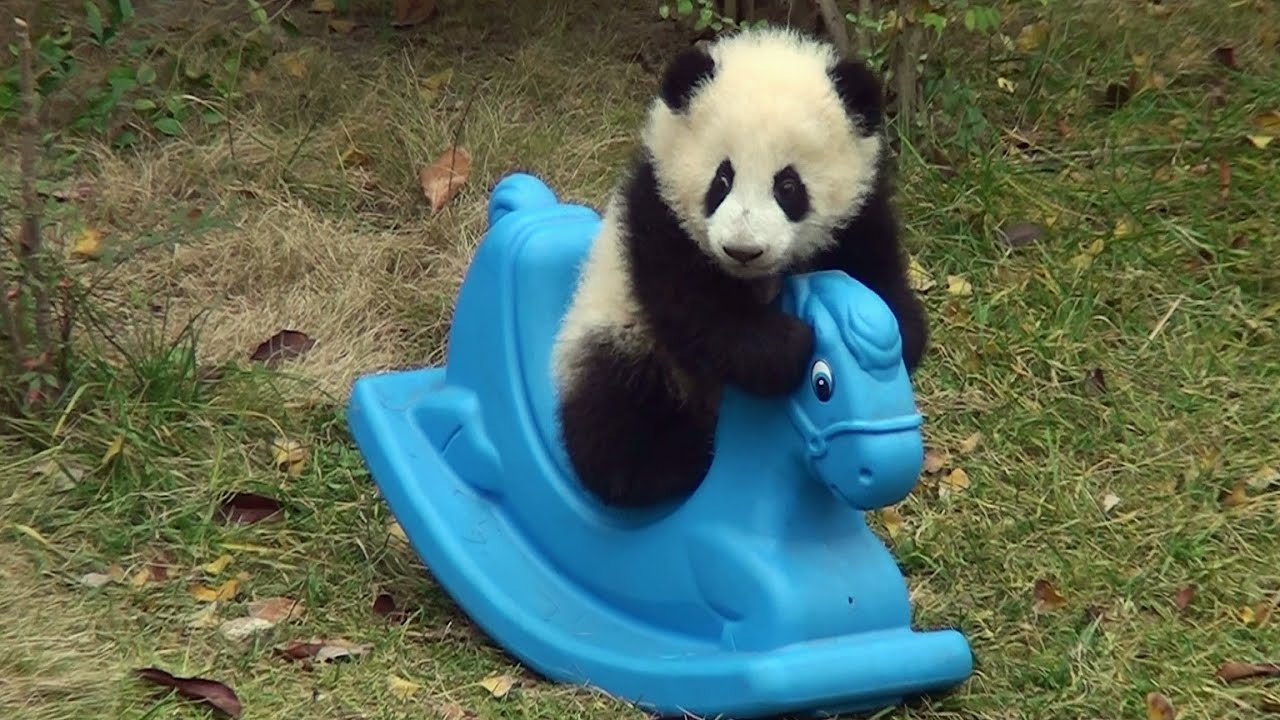
Adorable example of behavioral enrichment for a captive juvenile Giant Panda. SO CUTE.

Puzzle feeders, such as the one these Polar Bear brothers are enjoying, are very popular enrichment items.

Most enrichment stimuli can be divided into six groups: Sensory stimulation, feeding, manipulation (by the animal, ie toys), environmental (habitat enhancement), social (interacting with other animals), training, and puzzles.  Enclosures in modern zoos work very hard to facilitate all means of environmental and behavioral enrichment.

Behavioral enrichment in pets

This practice of stimulating animals to prevent boredom and behavioral issues goes well beyond animals in zoos.

An example of enrichment toys for a captive macaw.

As I've learned from Jackson Galaxy on My Cat From Hell, and Cesar Millan on The Dog Whisperer, a host of behavior problems in pets can be resolved through play, exercise, and "Catification" (Jackson Galaxy's term for creating feline-friendly environments in your home to accommodate a cat's natural instincts).  In other words, enrichment.


In this video Cesar talks about how to select the right rescue dog for you, and demonstrates his best dog-walking tips and tricks:


Abusive captive environments lacking enrichment and appropriate husbandry can have long-reaching effects for its former captives, even once they are freed from their prisons.  For example, dogs or animals that originate from puppy mills or pet store breeding-mills have many more behavioral problems than those that come from breeders.

Just another reason to "ADOPT DON'T SHOP"!


*~*~*~*~*~*


Saturday, June 28, 2014

Star Power Saturday : Ricky Gervais, Animal Lover and Activist

Star Power Saturdays will feature a different celebrity who speaks out for animals and/or has rescued their pets instead of shopping (#adoptdontshop).

This first celeb I chose to feature is one of my favorites: Ricky Gervais.

It was also his birthday this past Wednesday (June 25)! HAPPY (belated) BIRTHDAY RICKY!  Thank you for all you do for animals.

An outspoken activist, animal lover, atheist, comedian, and actor, Ricky has used his star power to spread the word on social media (follow him on Facebook or Twitter) and any way he can, about animal rights and plights of animals of all types around the world.

He also posts a lot of fun videos and photos of his Siamese cat, Ollie.

Ricky and Ollie take a selfie for Twitter.

In addition to being a loving pet owner, he is an active supporter of Cruelty Free International, opposing animal testing for cosmetics.


Maddie's Pet Adoption Days

I live in NYC and recently there was a massive pet adoption event called Maddie's Pet Adoption Days, and Ricky was in the city that weekend.  So I dropped him a note on Facebook to let him know about it, particularly the massive outdoor event held in Union Square.

I didn't get any response (I certainly did not expect one), but shortly thereafter these photos started appearing all over Facebook!


Uncanny resemblance.

I love that he went over just to cuddle some homeless furbabies.  Good guy!

Derek

One more thing I'd like to feature about Ricky is his show "Derek".  If you haven't seen it, I highly suggest checking it out on Netflix. He has called it a 'cry-medy', a comedy that sometimes makes you tear up (in a good way). Not many shows have as much heart as this, it's really special.

"Derek" is set at a retirement home, and the main character, Derek (Gervais), is an animal lover. Here's a clip from Season 2.


These are just a few examples of Ricky's love for animals.  Check here for more posts featuring a different animal-loving celeb, every Saturday.

*~*~*~*~*~*


Wednesday, June 25, 2014

Calling all Photographers! Shelter pets need your help

One of the most important things you can do to help your local shelter and rescue animals is to photograph them.  Yes, shelters absolutely need volunteers that are willing to clean cages, walk dogs, socialize cats, and so much more, but if you have an eye for photography and can work your way around a camera, then your skills are in HIGH demand across the country!

Check out these Before And After photos to see what a difference a good photo can make:

You can't even really see him in the top photo! 
Great example of the difference appropriate lighting and a better angle can do!

Such a sad intake photo, the one on the bottom shows what a charmer this dog is!

See what I mean?! Powerful stuff. It really is the difference between life and death, particularly at high-intake kill shelters.

You don't even have to be a professional to help homeless pets.  Here are some shots my boyfriend and I took of 2 kittens (Bobby and Joey) that we were fostering last year with NYC animal rescue Zani's Furry Friends.  They were adopted together shortly after we published the photos! 

You can see they're not fancy like the ones above, but they're still 1,000% more flattering than their intake photos from the NYC ACC.  I don't have those photos to show you unfortunately, sorry (but they were not good).


Joey lounging on a suitcase. I love his "come hither" eyes in this one.

Bobby at a Zani's Furry Friends adoption event at Petco.
"I'm so cute and such a good boy! Adopt me please!"

Joey hanging out at a Petco adoption event.
Joey and Bobby were adopted together at one of these events!

We took photos of all the cats at the adoption event that day, and they came out beautifully. Again, we are not professional photographers, but do have a nice camera and a pretty good eye.  Zani's was so appreciative, our photos were featured in their newsletter and really helped their cats get noticed.

All this reward for just a couple of hours of work.  We did it, so could you!!

Here's an idea: See if there's an adoption event in your area, show up with your camera, chat with a volunteer about your plan to help, and start shooting! Get an email address for the rescue or shelter, and email them your photos.  I promise you that good photos will NOT go to waste.

Good photos that capture the gleam in the animal's eye and love in their heart are gold for these animals and their rescuers, and can be shared on Facebook, Twitter, Petfinder, or the rescue's own site to help them find homes.


Tips, Tricks, and Related Links:

How to Take Great Photos of Shelter Pets Step-by-Step

The Power of a Good Photo for Shelter Dogs

This Photographer Is Giving Her All To Save Shelter Dogs

PAWSITIVE SHELTER PHOTOGRAPHY -- Saving Good Pets Through Better Photography

*~*~*~*~*~*