Pages

Showing posts with label captivity. Show all posts

Tuesday, July 8, 2014

Controversy of Captivity : Behavior Problems

When we think of animals in captivity the first thought is usually animals in zoos. However, there are many more types of abusive captivity out there in which animals are currently living:  puppy mills, aquariums, marine mammal parks, pet stores, factory farming, gestation crates, circuses, and the list goes on.

Animals that live in human care are in captivity.  Dogs were domesticated as early as 15,000 BC, but throughout history not only pets and livestock were kept in human care, but also wild animals in menageries and zoos.

The menagerie at Versailles, constructed by Louis XIV in the 1660's.

Most modern zoos make great efforts to create a habitat as close to the animals' natural environment as possible. However due to the nature of traveling circuses, factory farming, and puppy mills, animals in those situations are trapped in tiny enclosures and abusive environments. Those enterprises use animals for profit, so to maximize profit, they minimize expenses (at the animal's suffering).

Occasionally these captive animals, particularly those non-domestic wild animals, develop repetitive and purposeless behaviors called stereotypical behaviors or zoochosis. These behaviors include pacing, self-mutilation, over-grooming, swaying, head bobbing, and bar biting, to name a few.

If you have been to a zoo, pet store, or circus, then I guarantee some of these will look familiar to you:

Pacing

This is very common, I'd be very surprised if you haven't seen this before.  This usually causes well worn paths in the ground, and is often seen with big cats and wolves in captivity.

There can be a few reasons why an animal might pace, some theories include pre-feeding anticipation, checking on or marking territory, or an old habit ingrained from a previous small zoo enclosure.  However, as in the example in the video below, the enclosures are very small, with no behavioral enrichment opportunities (more on behavioral enrichment further down):


Bar biting

Includes licking, biting, chewing the walls or bars. Often seen in giraffes and primates.


Swaying, Rocking, Head Bobbing

Standing in one place and repetitively swaying back and forth. Seen in many different animals, particularly bears and elephants.


See more Stereotypical Behavior patterns here.

How to combat stereotypical behavior? Behavioral Enrichment!

So, now that we know what to look for, what is the best treatment?  The answer is Behavioral Enrichment.  I give the Sea Lion narration for feedings and enrichment sessions at the Central Park Zoo, and the way we explain Behavioral Enrichment is as follows:

"If you've ever played fetch with a dog or given a cat a scratching post, that is all behavioral enrichment. It encourages animals to do behaviors that are good for both their physical and mental well-being. Behavioral enrichment gives animals at the zoo something active to do and something intellectual to focus on."

Excellent buffalo enrichment for the lions at the Cheyenne Mountain Zoo.
The buffalo was built so keepers can attach meat, rawhide, and play sounds from it, to further enhance the lions' enrichment experience.

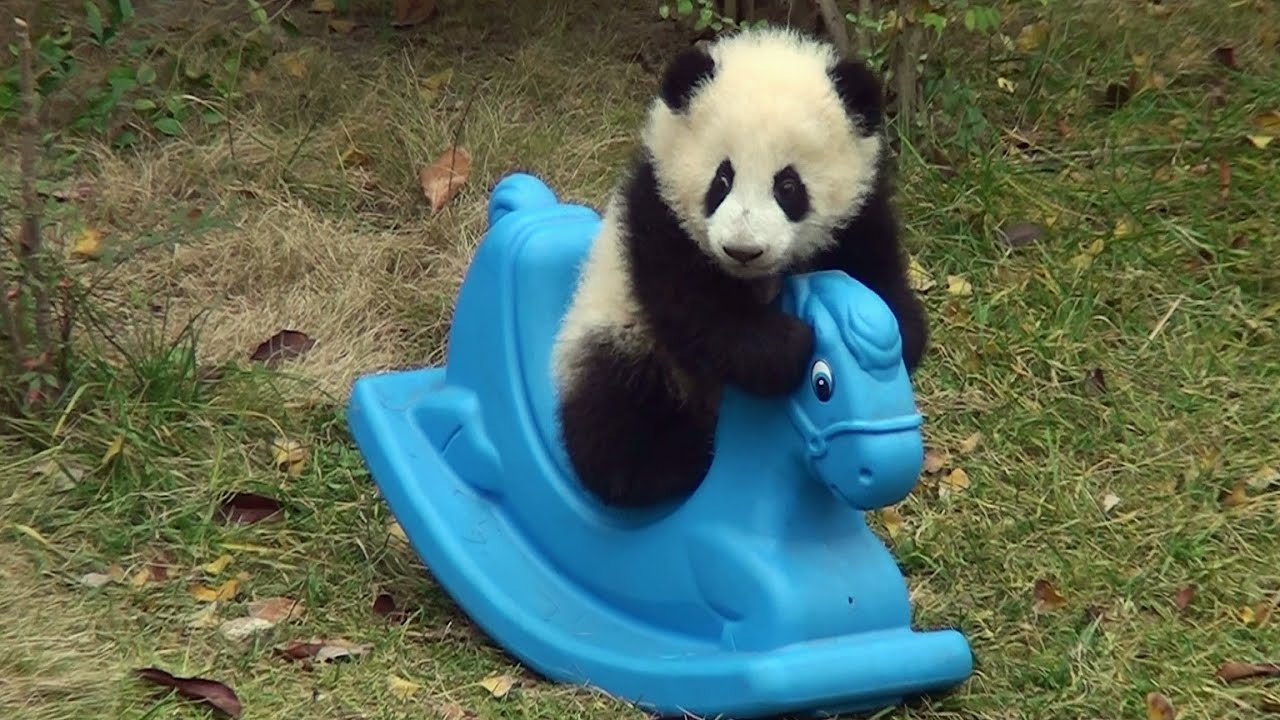
Adorable example of behavioral enrichment for a captive juvenile Giant Panda. SO CUTE.

Puzzle feeders, such as the one these Polar Bear brothers are enjoying, are very popular enrichment items.

Most enrichment stimuli can be divided into six groups: Sensory stimulation, feeding, manipulation (by the animal, ie toys), environmental (habitat enhancement), social (interacting with other animals), training, and puzzles.  Enclosures in modern zoos work very hard to facilitate all means of environmental and behavioral enrichment.

Behavioral enrichment in pets

This practice of stimulating animals to prevent boredom and behavioral issues goes well beyond animals in zoos.

An example of enrichment toys for a captive macaw.

As I've learned from Jackson Galaxy on My Cat From Hell, and Cesar Millan on The Dog Whisperer, a host of behavior problems in pets can be resolved through play, exercise, and "Catification" (Jackson Galaxy's term for creating feline-friendly environments in your home to accommodate a cat's natural instincts).  In other words, enrichment.


In this video Cesar talks about how to select the right rescue dog for you, and demonstrates his best dog-walking tips and tricks:


Abusive captive environments lacking enrichment and appropriate husbandry can have long-reaching effects for its former captives, even once they are freed from their prisons.  For example, dogs or animals that originate from puppy mills or pet store breeding-mills have many more behavioral problems than those that come from breeders.

Just another reason to "ADOPT DON'T SHOP"!


*~*~*~*~*~*


Monday, June 30, 2014

Controversy of Captivity : Orcas

I visited Sea World Orlando for the first time in 1993.  Free Willy had just been released, and it was one of my favorite movies. (Let's face it, any movie with animals was my favorite movie!) I remember feeling very conflicted while watching the 'Shamu Show' because of what I had learned from Free Willy.

During the show, Sea World repeatedly lauded itself on its wonderful care of its animals, but even 10 year old me could see signs of unhealthy Orcas.  I wanted to believe what the performers were telling me, that the animals were healthy and happy, but I just couldn't.  It broke my heart.

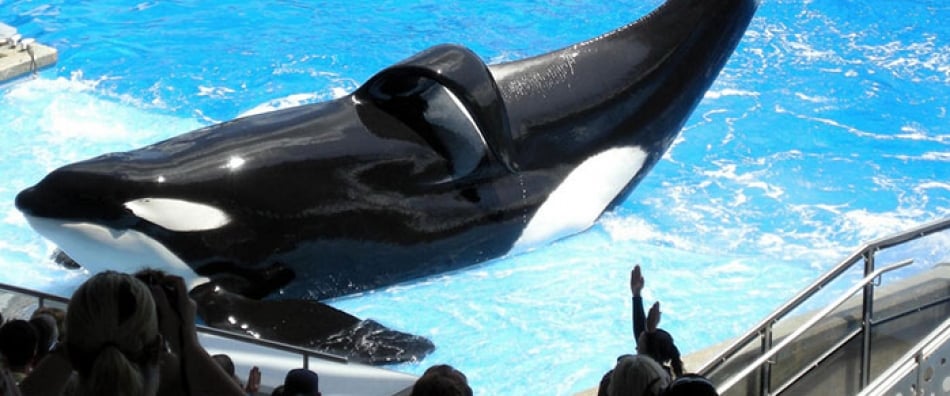
The most noticeable is the collapsed dorsal finAll captive adult male Orcas have collapsed dorsal fins. Sea World claims this is natural, and while there are many theories as to why this happens, the truth is it is actually very rare in the wild.  This excellent scientific paper goes into greater detail about "Flaccid" Fin Syndrome.


I have provided a list of links at the bottom of this page that can supplement additional information with more sanguinary images and descriptions of abuses in captivity and health issues of such animals, if you are so interested.

Blackfish

The controversy of Orcas in captivity has had a resurgence in the media recently with the tragic story of Tilikum, a captive Orca who is the main subject of the documentary Blackfish.  Among other many other reactions and protests, response to the film prompted many high-profile bands and musicians to cancel their 2014 concerts at Sea World Orlando and Busch Gardens Tampa, raising awareness of the controversy to a fever pitch in the media.

THANK YOU to Heart, Barenaked Ladies, Willie Nelson, Martina McBride, .38 Special, Cheap Trick, REO Speedwagon, Pat Benatar, The Beach Boys, Trace Adkins and Trisha Yearwood for your efforts.  Your actions and outspoken activism has had a huge impact on the awareness of the plight of captive animals around the world.

Sea World has tried to address and dispute Blackfish's information, with minimal results. Just last week Sea World was voted one of the top 4 Most Hated Companies in America, right up there with Comcast, Monsanto, and WalMart.

Orca Facts

Last month, "Granny", the world's oldest Orca, was spotted again in the wild off the coast of Canada. She is 103 years old.  In a little over a week, Granny and her pod traveled over 800 miles. A far cry from the bathtub Tilikum and his captive counterparts around the world are trapped in.  

Sea World contends that "no one knows for sure how long killer whales live".  What great, pointedly vague non-information coming from such a self-professed source of knowledge of all things Orca!


You may notice I only use the word "Orca" when referring to these marine mammals.  

The name Killer Whale is a misnomer.  First of all, they belong in the oceanic dolphin family.  Their scientific name is Orcinus orca. Centuries ago, Spanish sailors observed their effective hunting techniques and dubbed them "Matador de Ballenas" (translated: "Killer of whales").   Somewhere along the way the name got shortened and mixed up, hence the resulting "Killer Whale" label. Wrong-o!

Success Story: Free Willy Keiko Foundation

One inspirational story of rescue and rehabilitation into the wild is Keiko.  I chose Keiko's story as he was the subject of the movie Free Willy, which had such an impact on me. 

His story demonstrates the power of the media to influence positive change. He was born in 1978 in the wild near Iceland, caught by a fisherman at a very young age, bought and sold as a captive performing animal, ending up in abhorrent conditions at a marine park in Mexico.  

The movie was released in 1993, and by 1996 he was moved to a rehab facility in Oregon where his health improved dramatically and was taught to hunt for live food.  Over the next couple of years, Keiko gained nearly 2,000 lbs (1 ton) of weight, his skin lesions healed, and he could feed himself.  

In 1998, 20 years after his traumatic capture as a baby, Keiko was re-introduced to his native Icelandic waters, where he lived freely until his death (by natural causes, acute pneumonia) in 2003.


More Links:

Blackfish Movie

The Fate of Captive Orcas in 2014

Eight Facts You Need to Know about Killer Whales

Sea World of Hurt

The Keiko Project

Orcas in Captivity Wiki

*~*~*~*~*~*